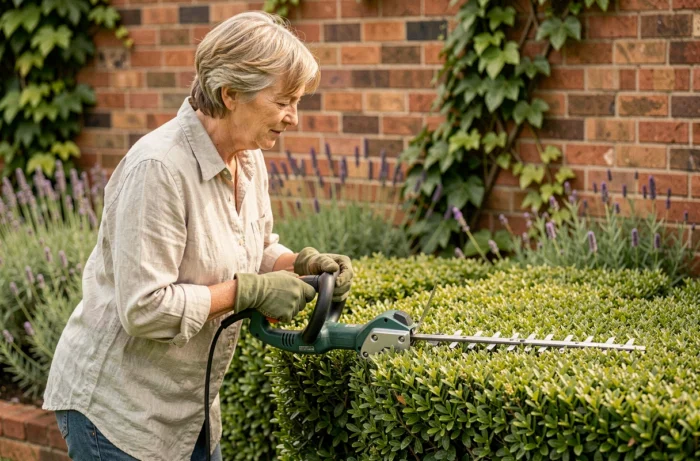
A dense thirty-metre privet hedge calls for a different tool than a five-metre laurel border next to the patio.
Before comparing specifications, save time by looking at what you actually have in front of you: the height of the hedge, the thickness of its branches and the distance to the nearest power outlet. These three factors immediately rule out half the models and point you towards an electric hedge trimmer suited to your garden.
Corded or cordless: let your garden decide before your budget
For a small garden where the hedge runs alongside the house, a corded model with a garden extension lead is more than enough. Plug it in, trim, put it away. The cord limits your range, but guarantees a steady power supply without any loss of performance towards the end of the session.
The picture changes when the hedge runs along the back of the garden or surrounds a medium-sized plot. That’s where cordless models really come into their own. You can move freely, work around corners without worrying about the cable, and there’s no risk of cutting through the cord. Lithium-ion battery life varies depending on capacity (measured in amp-hours) and the thickness of the branches being cut. For typical foliage, a full charge will generally last for a standard maintenance session.
For a detailed comparison of cordless and corded models, taille-haie-electrique.com lists technical specifications by category and intended use.
Blade length and tooth spacing: match the cut to your hedge
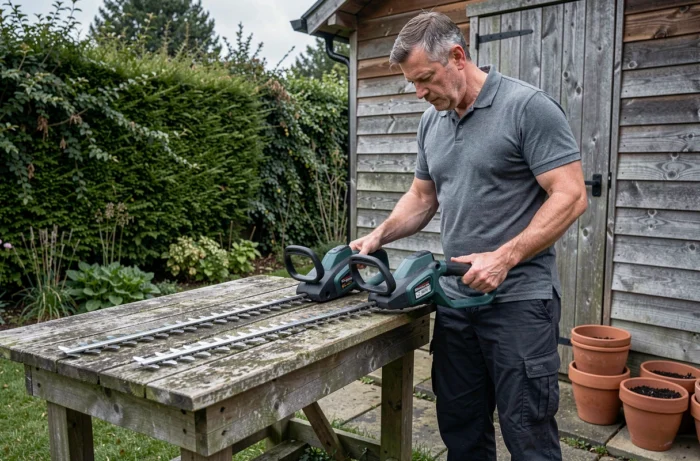
Gardeners often buy the longest blade they can find, thinking it will save time. On a tall, straight hedge, a longer cutting blade really does speed up the job. But on a low hedge or in a tight corner, that same blade becomes cumbersome and makes it harder to achieve a precise finish.
Choose blade length to suit the width of your hedge
The rule of thumb is simple: the blade should be slightly longer than the width of the hedge, so you can cut each side in a single pass. If the hedge is around forty centimetres wide, a blade of about fifty centimetres should do the job. For a thicker or taller hedge, choose a longer blade.
Tooth spacing and branch diameter
The spacing between the blade’s teeth determines the maximum branch diameter the trimmer can cut cleanly. Narrow spacing gives a neat cut on fine foliage (boxwood, young hornbeam). Wider spacing can handle thicker branches, such as those of a mature cherry laurel or photinia.
- Narrow spacing: suited to fine-leaved hedges and a neat finish, but struggles with branches over one centimetre in diameter.
- Medium spacing: versatile and suitable for most residential hedges made up of common evergreen species.
- Wide spacing: designed for dense hedges with woody branches, but gives a less smooth cut on soft foliage.
Checking the tooth spacing before you buy helps avoid the frustration of a trimmer that chews through branches instead of cutting them cleanly.
Weight, ergonomics and fatigue: what matters after twenty minutes of trimming
Product specifications list the weight of the trimmer, including the battery for cordless models. But that figure doesn’t tell the whole story. Weight distribution makes a big difference to comfort, especially when trimming overhead with your arms stretched above your head.
A well-balanced hedge trimmer is less tiring than a lighter model with poor weight distribution. You’ll notice the difference by the second vertical pass: if the blade tip dips or the motor pulls backwards, your wrists have to compensate constantly.
Rotating handle and cutting position
Some models have a rotating rear handle. This lets you switch from horizontal cutting (the top of the hedge) to vertical cutting (the sides) without twisting your wrist. On an L- or U-shaped hedge, this ergonomic feature noticeably reduces fatigue and helps you achieve a more even finish.
The anti-vibration system is also worth considering. Strong vibrations transmitted to your hands and forearms limit how long you can work comfortably. Models fitted with rubber mounts or cushioned handles let you work for longer without significant discomfort.
Blade maintenance and the lifespan of an electric hedge trimmer
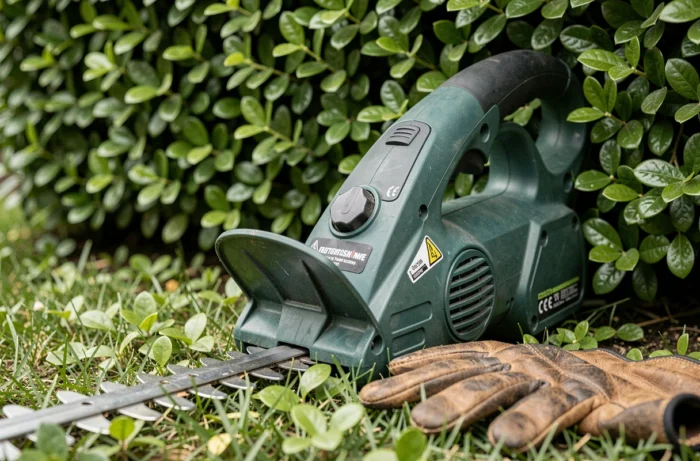
An electric hedge trimmer requires little maintenance compared with a petrol model (no spark plug or fuel mixture). Most of your attention should go to the blade.
- After each use, remove sap and plant debris with a damp cloth. Dried sap sticks the teeth together and slows the blade’s movement.
- Apply lubricating spray along the full length of the blade to reduce friction and protect it against corrosion.
- Check the blade’s sharpness once or twice a season. Dull teeth crush branches instead of cutting through them, damaging the hedge and putting extra strain on the motor.
- For a cordless model, store the battery at room temperature during the off-season to preserve its capacity.
On this last point, the European battery regulation introduces removal and replacement requirements for portable batteries incorporated into products from 18 February 2027. Before buying a cordless model, it’s worth checking that the manufacturer offers replacement batteries and accessible after-sales service.
Trimming hedges and respecting the nesting season
Choosing the right tool doesn’t mean you can skip an important question: when should you trim? The French Office for Biodiversity recommends avoiding hedge trimming and pruning from 15 March to 31 July, during the bird nesting season.
Before starting the trimmer, a quick check around the hedge can help you spot any active nests. Even outside the sensitive period, if a nest is occupied, postpone work on that section. This two-minute check helps protect biodiversity, which contributes to a healthy garden ecosystem, including by keeping pests in check.
The best electric hedge trimmer isn’t the most powerful or the most expensive one on the shelf. It’s the one with a blade suited to your hedge, a weight you can manage throughout the session, and a battery or cord that works for the layout of your garden.