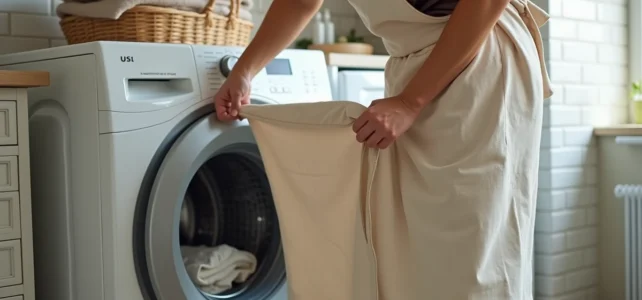
Washing aprons in the machine seems trivial, until the moment you open the drum to discover a tangle of cords knotted together. The problem does not come from the washing program or the detergent: it comes from the very shape of the apron, with its long loose straps that wrap around everything they encounter.
Measuring the impact of the type of apron and the preparation method on the final result allows you to target the actions that truly make a difference.
Fixed cords, clips, or removable straps: which model tangles the least
Not all aprons pose the same problem in the machine. The determining factor is neither the color nor the cut, but the attachment system of the cords. Feedback from professionals in collective catering confirms that models with detachable straps or clips (so-called “breakaway” systems) significantly reduce the risk of tangling, as the straps are removed before washing.
| Type of attachment | Risk of tangling | Preparation before washing |
|---|---|---|
| Sewn cords (classic) | High | Knotted or net mandatory |
| Removable straps (clips, snaps) | Low | Removal of straps, separate washing |
| Apron without cord | Almost none | No specific preparation |
Aprons with sewn cords represent the majority of models sold to individuals. In contrast, in fast food and among baristas, the trend is to choose models with removable attachments to simplify washing in large volumes. If you buy a new apron, this criterion deserves as much attention as the material or style.
To delve deeper into the preparation of cords before a machine cycle, MYN Idee’s tips detail several knotting methods suitable for classic aprons.
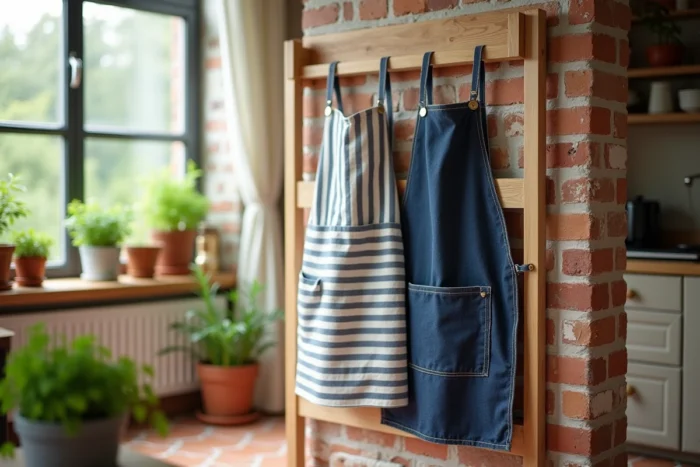
Laundry net and cord knotting: comparison of the two anti-knot methods
When the straps are not removable, two approaches dominate the field recommendations: tying the cords together before washing, or placing each apron in an individual net (laundry bag).
Tying the cords: simple but imperfect
Attaching the apron straps in a loose knot around the waist of the apron prevents the cords from floating freely in the drum. The action takes a few seconds.
The limitation: with several aprons in the same machine, the knots can tighten due to the spin cycle. You would then be trading one tangling problem for a problem of tight knots that are difficult to undo.
The individual laundry net: the most reliable method
Placing each knotted apron in a separate laundry bag is the practice most often seen among professionals washing large volumes. Baristas and cooks even separate front-of-house aprons from back-of-house aprons to avoid the migration of grease odors onto service aprons.
- One apron per net, cords folded and loosely knotted around the body of the apron
- Nets closed with a zipper rather than a drawstring, to avoid adding an extra thread in the drum
- Appropriate net size: too large, the apron moves too much and the cords come undone; too small, the fabric does not wash properly
One net per apron remains the safest method against tangling, especially if you wash three or more aprons at the same time.
Cotton or polyester: adapting the washing cycle to the apron material
The “anti-knot” angle is not limited to preparation. The material of the apron directly influences the time during which the cords remain entangled and damp after the cycle. Care guides for synthetic textiles remind us that polyester and synthetic blends dry faster than cotton, which mechanically reduces the duration during which any knots remain tight due to moisture.
Cotton absorbs more water. Its cords swell, become stiffer when wet, and the knots formed during the spin cycle get stuck. In contrast, polyester straps maintain their flexibility even when wet and untangle more easily when coming out of the drum.
| Material | Recommended temperature | Relative drying time | Ease of untying upon exit |
|---|---|---|---|
| Cotton | 40 °C (risk of shrinkage beyond) | Long | Difficult if knot is tight |
| Polyester / blend | 40-60 °C | Short | Easy |
| Linen | 30-40 °C | Long | Medium |
A polycotton apron combines quick drying and good resistance to frequent washes. For intensive use in the kitchen, this compromise facilitates daily maintenance without sacrificing comfort.

Grease stains on apron: pre-treat before washing to avoid multiplying cycles
An apron poorly pre-treated before machine washing requires a second wash, which doubles the chances of tangling. Pre-treating grease stains before the cycle reduces this risk.
- Apply Marseille soap or dishwashing liquid directly to the greasy stain, let it sit for a few minutes before putting it in the machine
- Rinse any splashes with cold water immediately after use, before the grease penetrates the fibers
- For white aprons, soaking in white vinegar before the cycle helps dislodge residues without resorting to a high temperature
Pre-treating the apron before washing avoids starting a second cycle. Fewer machine passes mean less chance of the cords wrapping around neighboring laundry.
Drum filling: an underestimated detail
An overfilled drum compresses the aprons against each other and promotes the tangling of the straps. An underfilled drum allows the cords to whip freely during the spin cycle.
Filling the drum two-thirds full leaves enough space for water to circulate without allowing the cords to swirl. This dosage applies to all types of laundry, but it takes on particular importance with textiles with long attachments.
The choice of apron model weighs as much as the washing technique. A removable strap apron, made of synthetic blend, placed in an individual net after prior pre-treatment, comes out of the machine without knots and without residual odors. The material and the attachment system are the two variables to consider from the moment of purchase, not just at the time of washing.