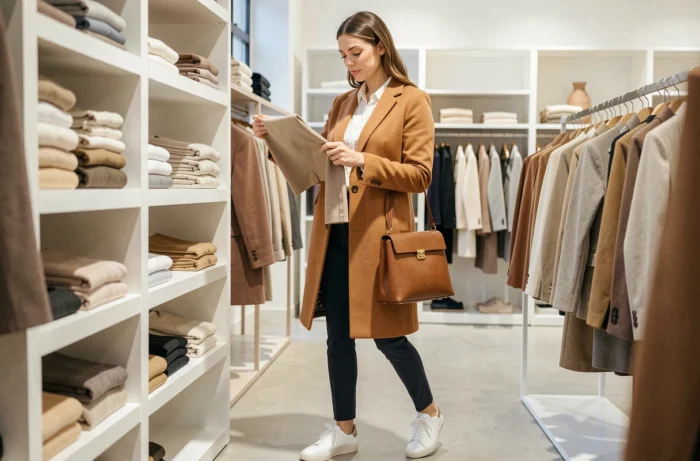
The fashion market is undergoing a structural transformation where style is no longer separate from the traceability of materials or the regulatory framework. Since the publication of law n° 2026-602 on July 8, 2026, France has imposed a legislative filter on ultra-fast fashion that concretely changes purchasing criteria. Autumn-winter fashion trends are now viewed through this lens: cuts, fabrics, colors, but also environmental labeling and resale circuits.
Environmental labeling in textiles: what changes for fashion shopping
The “Environmental Cost” initiative, launched in October 2025, is entering a decisive phase. Starting in October 2026, third parties will be able to publish an environmental score for a garment if the brand has not done so itself. This opening forces brands to document their supply chains or accept that an external organization does it on their behalf.
For consumers, this means that a comparable environmental score between brands becomes accessible directly in stores or online. We observe that this mechanism is already pushing some labels to rephrase their product sheets, specifying the origin of fibers, the country of manufacture, and the estimated carbon footprint of transport.
In practice, shopping reflexes are evolving: comparing two dresses or two jackets is no longer limited to fit and price. The displayed score guides the choice towards pieces whose production is documented. Platforms that aggregate multiple brands, such as Fashion Stores, facilitate this comparison work by bringing together brands with varied positions under one interface.
Second-hand and resale: a style lever, not a compromise
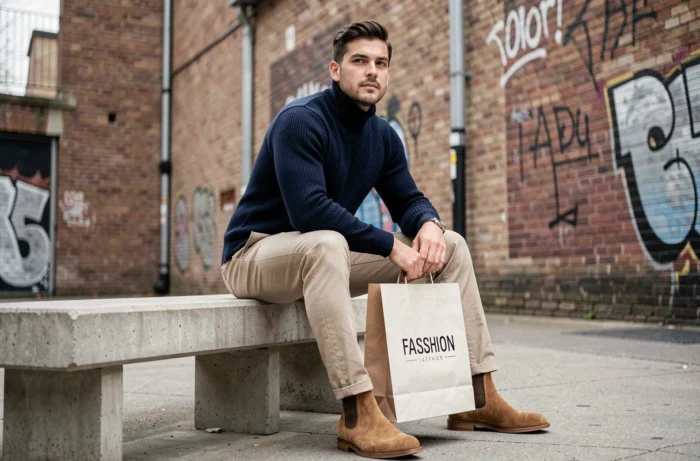
The second-hand fashion market is growing faster than the new market, according to the report The State of Fashion 2026 published by McKinsey and BoF. Resale is no longer a parallel channel reserved for bargain hunters. It is becoming a strategic lever integrated by the brands themselves into their offerings.
This shift has a direct impact on how to build a look. Mixing a vintage piece (a structured blazer from the 1990s, a geometric print dress) with new basics creates silhouettes that a total new look does not allow. The second-hand wardrobe provides access to cuts, colors, and materials that are no longer found in current collections.
Selection criteria for a successful second-hand purchase
- Check the fabric composition on the original label: low-quality synthetic blends age poorly, while wool, linen, or thick cotton gain flexibility over time.
- Inspect the seams at stress points (armholes, crotch, pockets): a seam that gives way on a vintage garment often indicates a degraded thread throughout the piece.
- Favor neutral colors or timeless prints (houndstooth, stripes, polka dots) that easily combine with a contemporary wardrobe.
The relationship between perceived quality and price paid is the main driver of this segment. Industry data confirms that price alone weighs less in the purchasing decision, in favor of materials and environmental impact.
Autumn-winter trends: colors, volumes, and accessories to consider
The fashion shows and the first deliveries in stores outline some clear directions for the season. We recommend focusing investments on three areas rather than spreading the budget thin.
Color palette and prints
Butter, caramel, and deep burgundy dominate women’s wardrobes. These warm shades work well in total looks or in contrast with black or anthracite bases. In terms of prints, tartan returns in oversized proportions on scarves and coats, while dark floral patterns adorn mid-season dresses and blouses.
Volumes and structured cuts
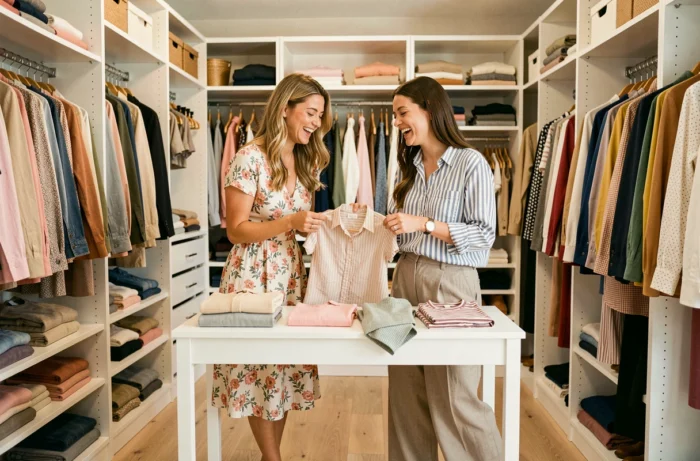
Wide-leg pants remain a staple, but the barrel cut (tapered at the bottom, loose at the thighs) is taking over from the classic wide-leg. Paired with a fitted sweater or a thin turtleneck, it redefines the proportions of the silhouette without additional accessories.
Short jackets, worn open over a long knit, create a layering effect that structures the upper body. Layering is not about piling on: each layer should remain visible and bring either a distinct color or texture.
High-impact accessories
A scarf worn as a belt or tied to a bag handle replaces flashy jewelry as a style marker. Sunglasses with thick frames (colored acetate, rectangular shapes) continue the trend from previous seasons but gain in chromatic sobriety.
- A medium-sized silk scarf is enough to elevate a monochrome outfit without weighing down the silhouette.
- A wide belt on a straight coat cinches the waist and transforms an oversized piece into a fitted garment.
- Square-toed matte leather boots complete an autumn-winter look without clashing visually with wide pants.
Delivery methods and shopping journeys: an underestimated choice criterion
2026 industry data shows a growing preference for lockers and pickup points rather than home delivery. This shift is not trivial: it changes how shoppers plan their orders.
Ordering at a pickup point involves a slightly longer wait but reduces impulsive return rates. The need to travel to pick up a package prompts mental confirmation of the purchase. For clothing, this filter decreases returns related to late-night impulse buys and improves overall satisfaction.
Brands that offer fitting in-store after online orders combine the best of both circuits. The item is reserved, the trip is planned, and trying on avoids postal back-and-forth. This hybrid model is gaining ground in mid-range and high-end ready-to-wear.
Building a stylish look in 2026 relies on a triptych: choosing pieces with traceable production, integrating second-hand as a source of uniqueness, and streamlining the shopping journey to limit returns. French regulations on labeling and ultra-fast fashion accelerate this convergence between style and responsibility, without one having to sacrifice for the other.