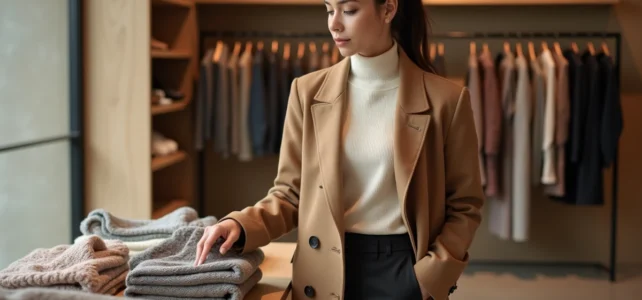
Each season brings its share of new pieces presented as essentials. The challenge lies less in spotting trends than in sorting out what truly structures a wardrobe and what is merely a fleeting marketing gimmick. Understanding the criteria that make a garment a true seasonal basic allows for buying less but better.
Textile eco-contribution and penalties: what changes for seasonal pieces
The law against ultra-fast fashion, definitively adopted by the French Parliament, introduces a modulation of textile eco-contributions based on the environmental footprint of each product. Penalties per piece will apply starting September 2026, with amounts increasing in stages until 2030.
In practical terms, brands that renew their collections at a very rapid pace will see the unit cost of each garment rise. This additional cost will be passed on to the retail price. Pieces from ultra-fast platforms, often featured in trendy selections at low prices, will become significantly more expensive in the French market.
To build a coherent seasonal wardrobe, it is better to direct purchases towards pieces designed to last several months rather than micro-trends meant to disappear in a few weeks. Brands that focus on tighter collections and traceable materials respond better to this new regulatory landscape and often offer a better quality-durability ratio.
This context makes it all the more relevant to rely on the Mode by S shopping selection to identify pieces that combine current style and longevity in the wardrobe.
Dress, shirt, denim: three fashion pieces that structure a summer wardrobe
Talking about essentials without specifying which ones remains vague. Three categories of clothing consistently appear in well-constructed women’s wardrobes this season, each serving a distinct purpose.

The dress as a standalone piece
The dress remains the most versatile garment of summer. It works on its own, without requiring complex combinations. Linen or thick cotton models withstand multiple washes without losing their shape, which sets them apart from lightweight synthetic fiber versions that lose their structure after a few wears.
The choice of cut matters more than the pattern. A straight or slightly flared dress adapts to more body types and contexts than a very fitted or very loose model.
The shirt, a transitional piece
The white or off-white shirt transcends seasons without losing its relevance. Worn open over a t-shirt, tied at the waist, or tucked into pants, it multiplies styling possibilities without the need for additional pieces.
A dense cotton poplin shirt ages better than a fine viscose model. The fabric weight determines the collar and cuff’s durability after several wash cycles.
Denim as a common thread
Jeans remain the most worn piece from one season to the next. Current cuts move away from slim to favor more generous volumes (barrel, wide straight). Denim also serves as a base for jackets and skirts that complete a summer wardrobe without overwhelming it.
Traceability and digital passport: reading a textile label in 2026
European regulation is gradually generalizing the Digital Product Passport for textiles. This system requires brands to make precise information about each garment accessible: origin of materials, place of manufacture, exact composition, detailed care instructions.
For a thoughtful fashion purchase, this traceability changes the game. It allows verification of whether a garment presented as “eco-responsible” truly is, beyond mere marketing claims. Extended Producer Responsibility (EPR) reinforces this requirement by obliging brands to fund the end-of-life of their products.
Before adding a piece to one’s wardrobe, a few elements deserve verification:
- The fabric composition: a blend with more than half natural fibers (cotton, linen, wool) generally offers better durability than a predominantly synthetic fabric.
- The country of manufacture and transparency of the production chain: brands that detail their workshops and suppliers inspire more trust than those that remain vague on this point.
- Recognized certifications (GOTS, Oeko-Tex, BSCI): they attest to regular checks on manufacturing conditions and the absence of harmful substances.
Trendy colors and seasonal palette: going beyond the trend effect
The palettes announced as “colors of the season” change every six months. Building a wardrobe around a very pronounced shade exposes one to rapid fatigue. Neutral tones (off-white, beige, cream, navy blue) remain wearable well beyond a single season.
This does not mean that color should be banned. A strong piece in a vivid shade (butter yellow, terracotta, sage green) works as an accent in an outfit made up of neutral basics. The proportion rule is simple: one colored piece per outfit is enough to create an effect without turning the look into a trend catalog.
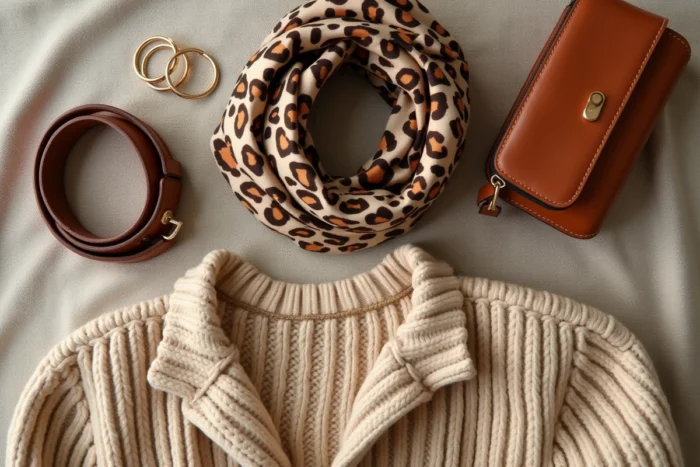
Accessories (bag, belt, shoes) allow for introducing a seasonal touch without committing a significant budget to garments whose color will go out of style. A trendy accessory is cheaper to replace than a coat whose color may no longer be appealing after a few months.
Fashion pieces that transcend seasons share three characteristics: a fabric with a weight that withstands use, a cut that does not depend on a micro-trend, and a color compatible with the rest of the wardrobe. The new French textile regulation is pushing in this direction, making ephemeral collections more costly to produce and sell.
Focusing on solid basics rather than accumulating disposable pieces remains both a style choice and an economic calculation.