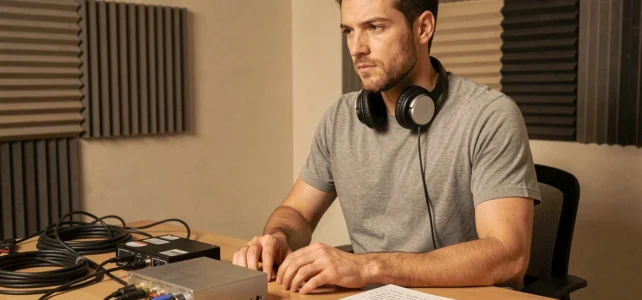
HDfever stopped publishing at a time when the French-speaking audio and video testing market was already severely lacking in rigorous measurement protocols. The site offered calibrated test benches for projectors, amplifiers, and home theater speakers, with a methodology that few online media have replicated since. Understanding what this media brought and what has changed in the technical landscape since its dormancy allows for a better evaluation of the available testing sources today.
Audio and Video Measurement Protocols: What HDfever Practiced
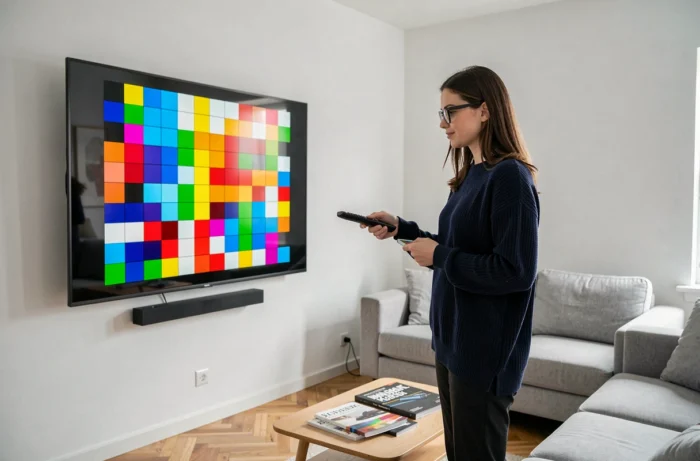
The value of an audio or video test relies on the reproducibility of measurement conditions. HDfever stood out for its systematic use of calibration patterns to assess native contrast, color fidelity, and display latency of projectors. The results were expressed in actionable data, not subjective impressions.
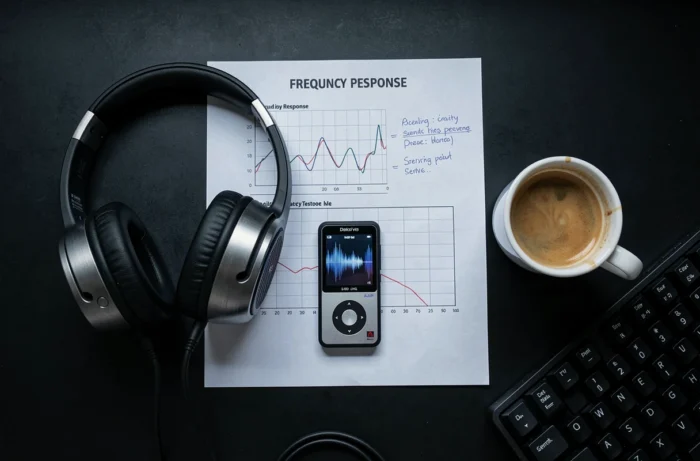
On the audio side, the test benches included measurements of frequency response, harmonic distortion, and signal-to-noise ratio. These parameters, often absent from consumer manufacturer specifications, allowed for the comparison of amplifiers or speakers on a common technical basis.
We observe today that most French-speaking tests are limited to listening impressions without standardized protocols. The decline of HDfever has exacerbated this deficit. A few international players like Rtings maintain an instrumented approach, but exclusively in English, leaving the French-speaking audience without a direct equivalent.
To measure the editorial legacy of the site and its place in the history of specialized testing, the HDfever media blog remains a useful documentary reference, particularly on comparisons of projectors and home theater amplifiers published between the mid-2000s and the end of the 2010s.
Convergence of Video and Audio Media: A Radically Expanded Testing Ground
The scope of audio and video tests has changed in nature. The TGI France study (October 2024 edition) now groups traditional television, streaming platforms, and video content on social media into a “TV & Video” set. On the audio side, radio, web radios, podcasts, and music streaming form a “Radio & Audio” block.
This convergence requires testing complete playback chains, from the source codec to the final transducer. A home theater amplifier is no longer evaluated solely on a 4K Blu-ray: it must also handle the Dolby Atmos stream from a streaming platform, the audio signal from a podcast, and the HDMI eARC output from a connected television.
The protocols inherited from HDfever, focused on physical home theater, cover only a fraction of these uses. A relevant testing media in 2026 must include:
- The measurement of latency and decoding quality of streaming flows (Netflix, Apple TV+, Prime Video) on different devices
- The evaluation of audio playback over Bluetooth (aptX Adaptive, LC3, LDAC codecs) for mobile and podcast uses
- The colorimetric behavior in HDR10, Dolby Vision, and HLG depending on the source, as the same television can produce very different results from one platform to another
- The compatibility and management of spatial formats (Dolby Atmos, Sony 360 Reality Audio) on connected speakers and soundbars
No French-speaking site currently covers all of these parameters with declared instrumentation.
Digital Audio and Podcasts: The New Testing Battleground
In the first half of 2026, certified digital audio in France represents 1.65 billion digital listens of radio and podcasts. Nearly six out of ten French people consume audio podcasts. This massive shift towards dematerialized listening redefines the priorities of a test bench.
Testing a headset or a pair of earbuds without integrating the podcast chain (AAC or Opus compression, loudness normalization, binaural spatialization) amounts to ignoring the majority usage. The old HDfever protocols, calibrated for home hi-fi and home theater, did not address these formats.
The perceived quality depends as much on software processing as on hardware. A high-performance USB DAC does not correct a poorly mastered source flow. Relevant tests must now include reference files from podcast and music streaming platforms, not just lossless tracks in FLAC or DSD.
Independent Testing Sites: Why the Economic Model Hinders Rigor
HDfever closed for reasons that affect all independent testing media: funding through advertising and affiliate links creates a structural tension with editorial objectivity. A site that derives its revenue from Amazon or hi-fi merchants has a direct interest in publishing positive tests on the best-selling products.
Community forums like HCFR (Homecinema-fr.com) have partially filled the void, but with a collaborative format that does not guarantee either the calibration of measurements or the methodological consistency from one test to another. A user review on a forum does not hold the same value as an instrumented test bench.
The Rtings model, funded by affiliation but transparent about its protocols and measurement tools, remains an exception. In France, no media has managed to replicate this combination of technical rigor and economic viability since the disappearance of HDfever.
Choosing a Reliable Testing Source: Technical Criteria to Verify
In the face of the proliferation of video and audio content on social media, distinguishing a serious test from a mere promotional take requires checking a few specific points:
- Does the site publish its measurement conditions (projection distance, ambient light level, audio capture equipment used)?
- Do the results include frequency response graphs, gamma curves, or color space coverage, and not just scores out of 10?
- Does the tester declare their funding sources (affiliation, manufacturer loan, personal purchase)?
A test that does not meet any of these criteria falls into marketing content, not technical evaluation. The gradual disappearance of media like HDfever makes this vigilance all the more necessary for anyone investing in audio or video equipment.