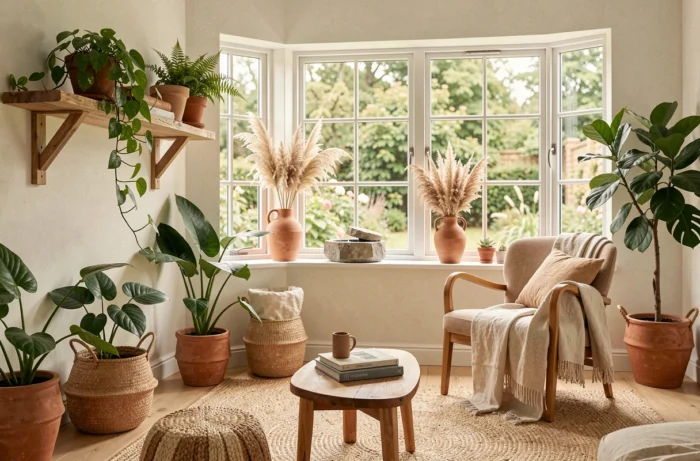
Inviting nature into your home is no longer just about placing a ficus in a corner of the living room. Biophilic design, a structural trend since 2025, suggests rethinking the entire space around light, materials, and organic forms. What practices produce a measurable effect on the living environment, and which ones remain cosmetic? Here are ten concrete ideas, categorized by type of intervention, to transform your daily life.
1. Stabilized moss living wall
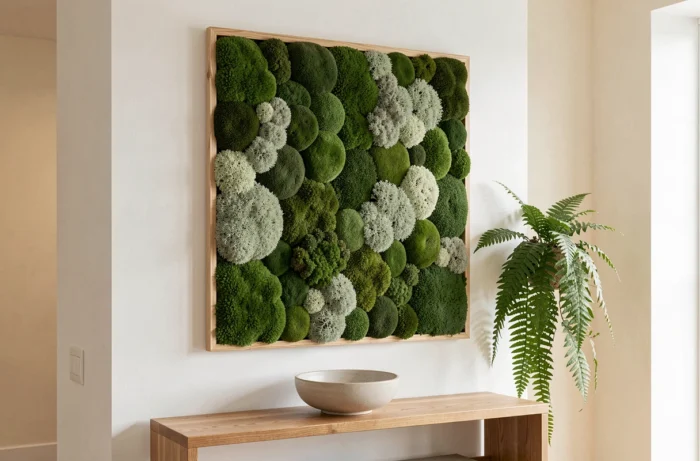
A stabilized moss living wall requires neither watering nor direct light. The moss, treated with a glycerin-based solution, retains its flexibility and color for several years without maintenance.
This type of covering absorbs some ambient sounds, making it suitable for open spaces where noise bounces off smooth surfaces. However, it does not improve air quality like a living plant would, as stabilized moss no longer photosynthesizes.
Specialized decoration brands offer ready-to-install panels, often combined with stabilized ferns or lichens. The wall rendering creates a strong visual impact without encroaching on floor space, a clear advantage for small areas.
2. Terracotta and sage green color palette in the living room
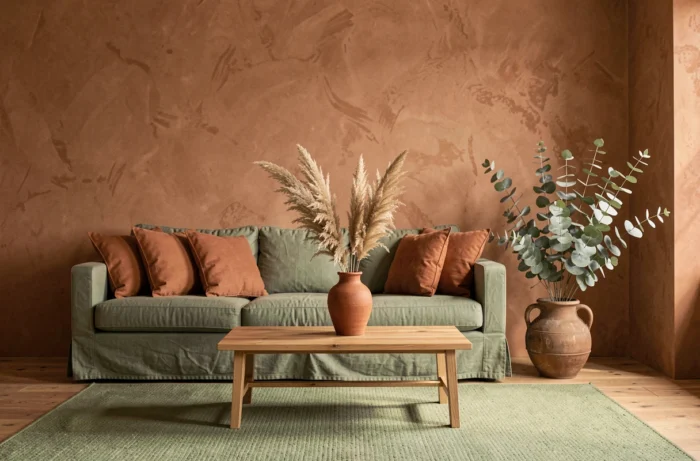
Natural palettes have evolved: soft ochres, sage greens, and warm browns dominate the trends from 2025 to 2027, replacing the teal blues that marked previous years. These shades replicate the tones of an earthy landscape, from the underbrush to the scrubland.
Applying a deep sage green to a single wall is enough to anchor nature in the room. Paired with raw wood or rattan furniture, the overall effect evokes an organic environment without overwhelming the decor. A sandy-colored linen sofa complements this approach coherently.
The resource available at faites-de-la-nature.fr details the links between nature and living environment to extend this reflection beyond mere decoration.
3. Aromatic garden in the kitchen with terracotta pots
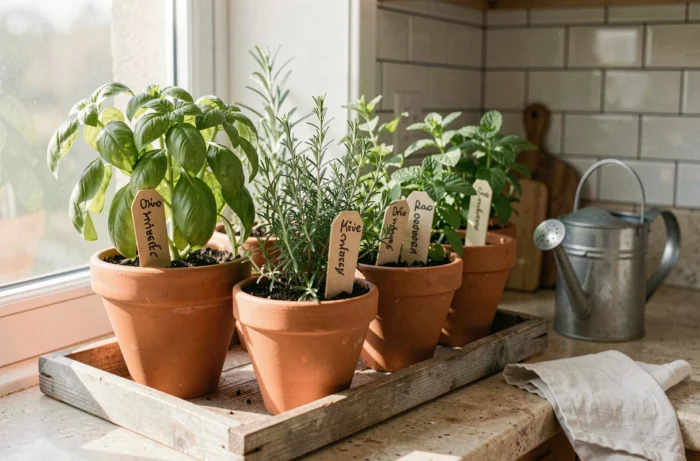
Basil, chives, mint, thyme: these aromatic plants grow easily indoors as long as they receive a few hours of light each day. The porous terracotta pots naturally regulate the moisture of the substrate and limit the risk of root rot.
Installing three to five pots on a kitchen windowsill transforms a functional space into a living micro-garden. Watering remains minimal, once or twice a week depending on the season. The benefit goes beyond decoration: these plants are directly useful in the kitchen.
4. Unfinished raw wood coffee table
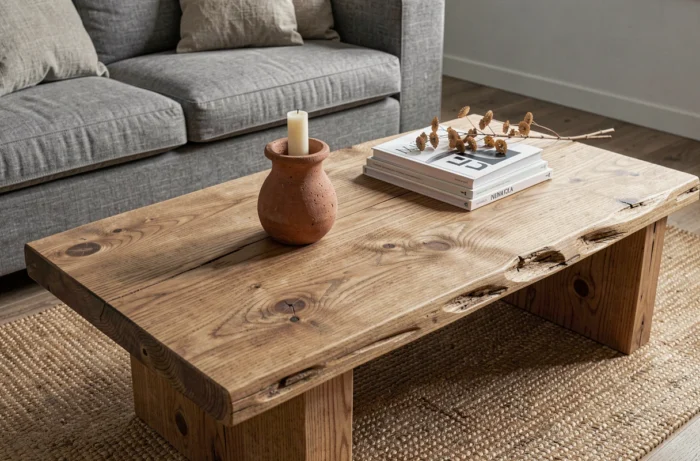
Bio-sourced materials like raw wood directly contribute to the biophilic trend. A coffee table carved from a tree slice, with visible veins and knots, introduces a unique piece that tells a natural story.
Unfinished wood retains its texture to the touch. A simple treatment with linseed oil protects the surface without masking the grain. This choice implies accepting the marks of time, which enhances the organic character of the furniture.
5. Lighting based on the circadian cycle
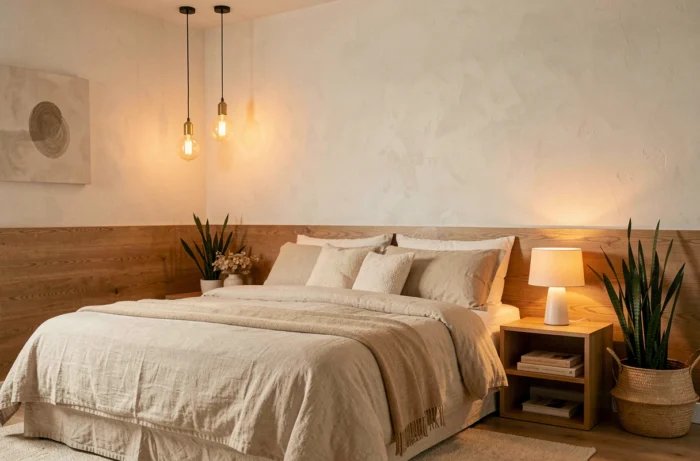
Biophilic design now incorporates lighting atmospheres based on circadian cycles. Connected bulbs allow for programming a cold, bright light in the morning, followed by warm, dimmed light in the evening.
This principle mimics the natural variation of sunlight. The goal is to support the wake-sleep rhythm without relying on uniform lighting throughout the day. However, the initial investment remains higher than for a conventional light fixture.
6. Indoor fountain made of natural stone
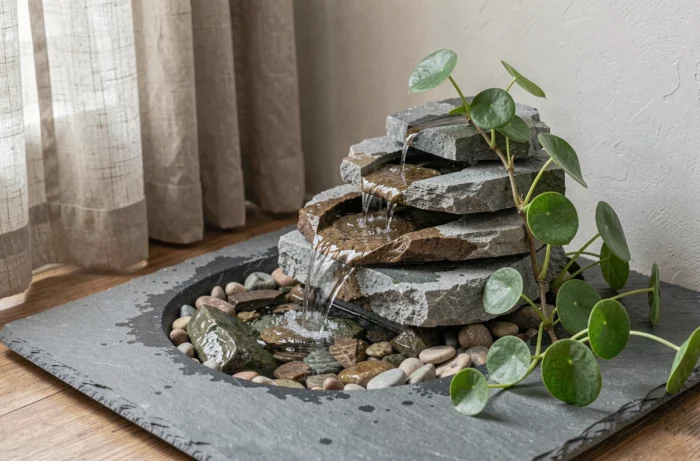
Moving water produces a continuous background sound that masks urban noise. A tabletop stone fountain, powered by a low-energy pump, introduces this sensory element without construction work.
The choice of material matters: natural stone (slate, polished granite) ages better than resins that mimic rock. Maintenance is limited to regular cleaning to avoid limescale deposits and a weekly water top-up.
7. Linen and hemp textiles for the relaxation corner
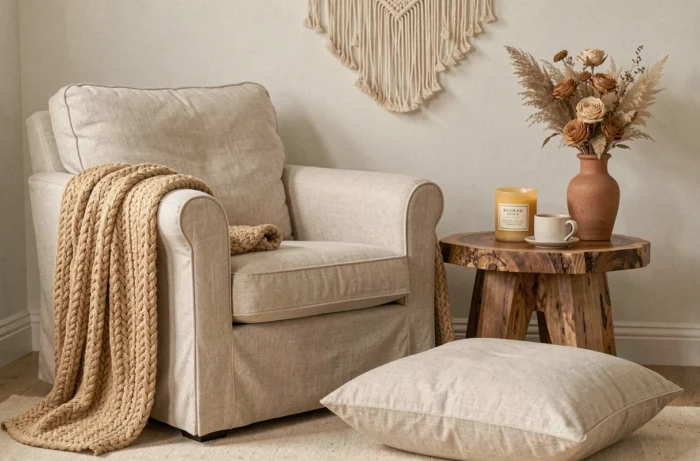
Replacing synthetic covers with linen or hemp transforms the texture of a room. These natural fibers, thermoregulating, remain cool in summer and soft in winter.
A hemp throw on an armchair, raw linen cushions on a sofa, a cotton gauze curtain: these additions require no heavy renovations. Linen naturally wrinkles, contributing to the desired organic aesthetic.
8. Air-purifying plants in closed rooms
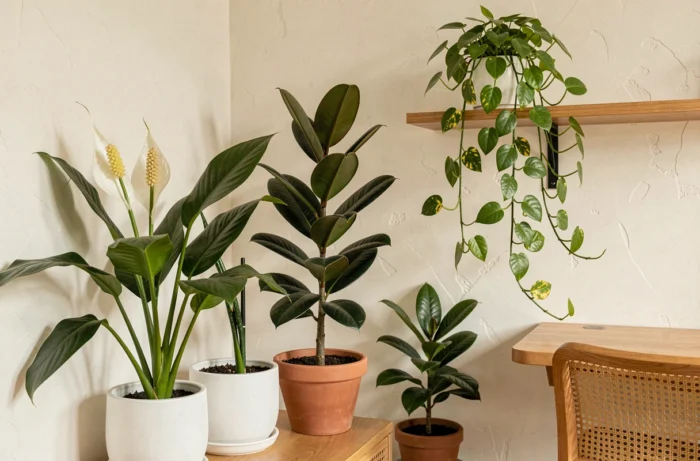
Spathiphyllum, chlorophytum, pothos: these plants are frequently mentioned for their ability to absorb certain volatile organic compounds present in indoor air. Their dense foliage and rapid growth are suitable for low-light rooms like an office or an entryway.
Watering these species is straightforward:
- Spathiphyllum: keep the substrate moist, watering once or twice a week
- Chlorophytum: drought-tolerant, moderate watering, thrives in partial shade
- Pothos: trailing vine suitable for high shelves, water when the surface soil is dry
9. Closed terrarium as a decorative micro-ecosystem
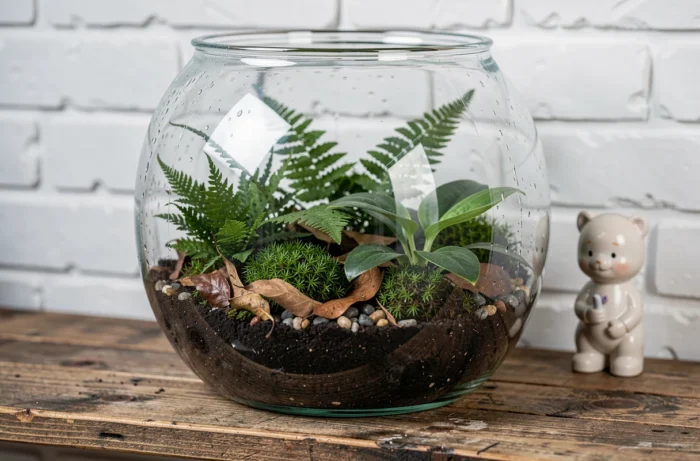
A closed terrarium operates in a closed circuit: water evaporates, condenses on the walls, and then falls back into the substrate. This self-sustaining micro-ecosystem requires only initial watering and exposure to indirect light.
Mosses, small ferns, and selaginella develop slowly within it. The transparent glass container becomes an object of contemplation, placed on a coffee table or shelf. The only constraint is to avoid direct sunlight, which overheats the enclosed space and burns the plants.
10. Biomorphic shapes in furniture and objects
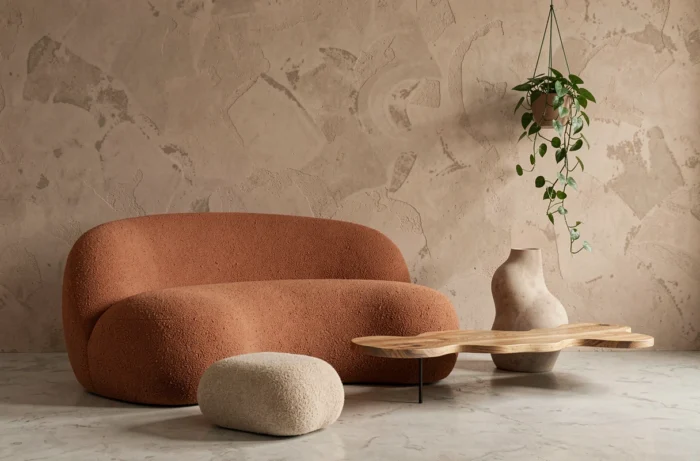
Biophilic design is not solely about plants. Biomorphic shapes, inspired by natural curves, influence the design of furniture, lighting, and vases. A mirror with irregular contours, a vase whose silhouette resembles a pebble polished by water: these objects introduce nature through geometry.
This principle is based on the idea that the human brain responds positively to organic curves, in contrast to strict right angles. Integrating two or three biomorphic pieces into a living room is enough to soften a space without altering the existing structure.
Among these ten approaches, some affect the visual atmosphere (colors, shapes), while others engage the senses (sound of water, texture of linen, scent of herbs). Combining at least three different sensory registers creates an interior that not only resembles nature but also reproduces part of the experience.