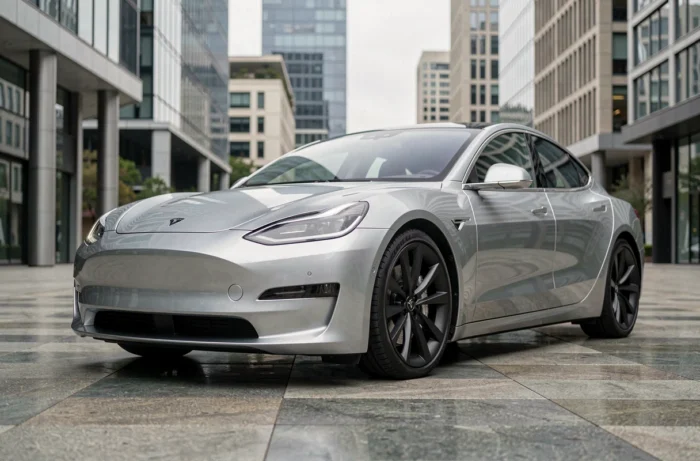
In July 2026, electric cars reached a historic milestone in Europe: 25.7% of new car sales across 16 major markets. In the first half of the year, registrations of battery electric vehicles already accounted for 22% of the total in Europe. This data reshapes manufacturers’ priorities and alters what a buyer can expect from a new model this year. Which segments are driving this growth, and where are the most significant gaps between powertrains?
Electric market share in Europe: key figures for 2026
The reports published by the ICCT during the summer of 2026 allow us to measure the extent of the shift. The table below summarizes the recent evolution of the share of battery electric vehicles in new European sales.
| Period | BEV Market Share (Europe) | Trend |
|---|---|---|
| End of 2025 | About 16% | Steady growth |
| First half of 2026 | 22% | Net increase |
| July 2026 | 25.7% | Historic record |
Between 2025 and the first half of 2026, BEV sales grew by about 30% year-on-year. This pace reflects an acceleration, not just a simple continuation of the trend.
On the Actu Auto Buzz website, the model sheets already reflect this shift: the majority of new listings include at least one electric or plug-in hybrid variant.
This growth relies on two simultaneous factors. The list prices of entry-level electric models have decreased thanks to the arrival of dedicated platforms (Citroën e-C3, Dacia Spring II, BYD Dolphin Surf). At the same time, the tightening of the CO2 emissions penalty has increased the cost of thermal powertrains, narrowing the purchase price gap.
Electric SUVs and range: what has changed in the 2026 models
The SUV segment remains the most competitive, but the profile of the models has evolved. Manufacturers are no longer content to electrify an existing thermal chassis. BMW, with its Neue Klasse platform, offers architectures designed from the ground up for electric propulsion.
The announced range now exceeds 500 km on several mid-range SUVs. Charging times have been significantly reduced thanks to the 800 V architectures adopted by several European and Korean manufacturers.
In contrast, new thermal SUVs face increasingly heavy penalties. The weight and emissions thresholds tightened in 2026 add several thousand euros to the acquisition cost of a petrol or diesel model exceeding 1,500 kg.
Accessible car innovations: Dacia Spring II vs. BYD Dolphin Surf
The match between the Dacia Spring II and the BYD Dolphin Surf summarizes a structural shift in the market. These two electric models target an audience that, two years ago, would have only considered entry-level thermal options.
The Dacia Spring II will arrive in dealerships at the end of 2026. It leverages the aggressive pricing strategy of the Romanian brand. The BYD Dolphin Surf, on the other hand, represents the offensive of Chinese manufacturers in the European electric city car segment.
What this duel reveals about the market
The challenge is no longer to convince buyers that electric works. The decisive criterion has become the total cost of ownership, including bonuses and penalties, insurance, maintenance, and consumption. In this regard, the two models differentiate themselves by their production and battery supply strategies rather than by their raw performance.
Autonomous driving and onboard technologies: where manufacturers stand in 2026
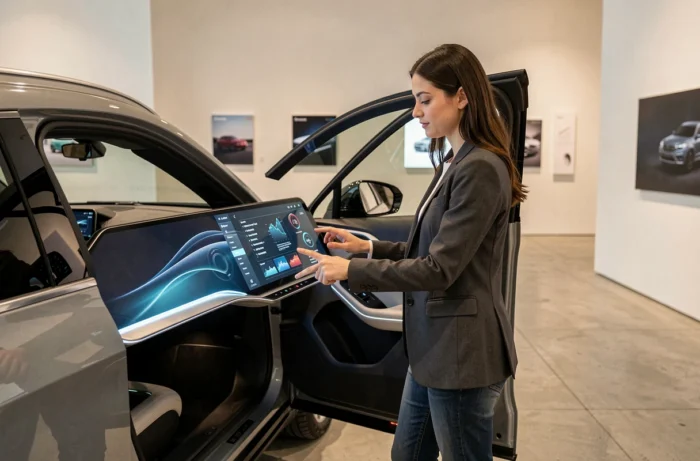
High-end models incorporate OLED screens, enhanced voice interfaces, and remote software updates. Onboard technology now aims not only at comfort but also at preventing urban accidents, with increasingly prevalent active safety systems in new models. In contrast, entry-level vehicles like the Dacia Spring II or the Citroën e-C3 remain deliberately sparse in electronics to keep costs down.
Environmental penalty and regulatory framework: what shapes the automotive offer in 2026
The ecological penalty scale has been tightened in 2026, with a lowered emissions threshold and a raised tax ceiling. Vehicles exceeding 1,500 kg are subject to a weight penalty that adds to the CO2 penalty, which doubly penalizes heavy thermal SUVs.
This regulatory framework partly explains McLaren’s offensive, which announces its first high-performance SUV. Sports car manufacturers must now contend with emissions constraints that push them to integrate electrified powertrains into their lineup.
The automotive market of 2026 is therefore not just a list of new products. Sales data, regulatory thresholds, and manufacturers’ pricing strategies converge towards a measurable shift. The milestone of one in four new cars sold as electric, reached in July 2026, serves as the most reliable benchmark for assessing the speed of this transition.