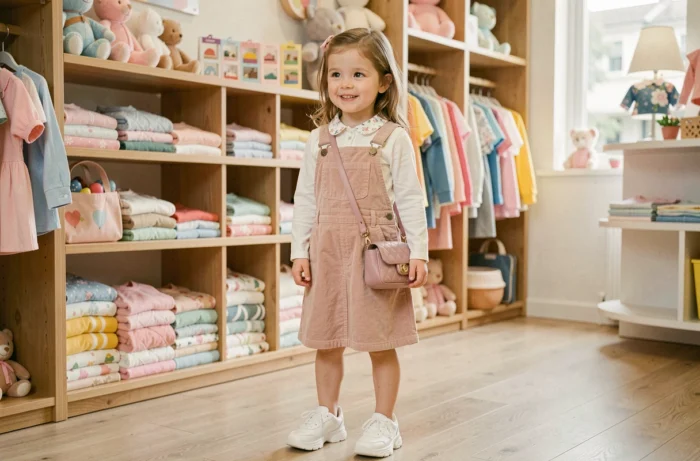
Dressing a child in 2024 means juggling their desires, everyday comfort, and rapidly changing collections. This year’s children’s fashion trends mark a return to natural materials, soft colors, and pieces that last more than one season.
Traceability and textile safety: what changes for children’s clothing
You may have noticed that online product listings increasingly display information about the origin and compliance of clothing? This is no coincidence. The European regulation GPSR (EU 2023/988), applicable since December 13, 2024, imposes enhanced traceability on all consumer products, including children’s clothing and accessories, for online sellers.
In practice, each product listing must now clearly identify the responsible operator and provide readable warnings. For parents, this means more direct access to safety information before making a purchase. This is a criterion to check, especially on marketplaces where references are multiplying.
For accessories like costume jewelry, hair clips, or small everyday items, this online labeling requirement also changes the game. Product listings must display complete traceability information, helping to eliminate items whose compliance remains unclear.
Specialized shops are already integrating these requirements into their selections, as seen on https://moonkidsstore.be/, which offers children’s collections with compliance tracking to European standards.
Colors and trendy prints for children 2024: the palettes that stand out
The autumn-winter 2024 collections for children share a common thread: soothing shades mixed with bursts of bright color. Pastel tones (powder pink, sky blue, almond green) remain very present, but this year they are paired with earthy colors inspired by nature.
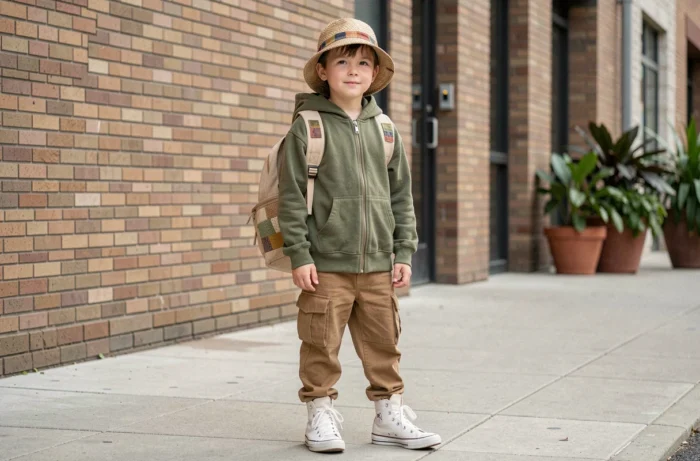
Chocolate brown, sand beige, and khaki create a sober base on which it becomes easy to build varied outfits. A neutral bottom paired with a colorful top is enough to create a balanced look without multiplying purchases.
In terms of prints, graphic patterns and stylized flowers take precedence over classic figurative prints. Nautical stripes are also making a comeback, worn by both girls and boys. The trend is towards mixing: a solid-colored pant with a patterned top, or vice versa, rather than coordinated outfits from head to toe.
Materials and cuts in children’s fashion: comfort as a choice criterion
Why this shift towards natural materials? Because parents are increasingly weighing durability against comfort. Thick cotton, blended wool, and soft jersey dominate the cold season collections.
Three concrete benchmarks for assessing the quality of children’s clothing:
- The fabric weight: a sufficiently dense cotton withstands repeated washes better and retains its shape after several cycles
- Flat seams at the armholes and collar: they prevent irritation, especially for the sensitive skin of little ones
- Elasticated finishes at the wrists and waist: they facilitate independent dressing from the age of three or four
The denim overall is making a strong comeback in children’s wardrobes. Worn with a fine turtleneck in winter or a t-shirt in mid-season, it is one of the pieces that can last through several seasons without losing style.
The sailor sweater, another classic, is available this year in looser and less structured versions. The idea is to allow the child to move freely. Oversized cuts are gradually replacing tight fits, even in formal collections.
Trendy children’s accessories 2024: hats, bags, and small details that matter
Accessories are taking on an increasingly important role in children’s fashion. They are no longer just functional complements: they contribute to the overall style of the outfit.
Here are the most worn pieces this season:
- The ribbed knit hat in blended wool, available in the same pastel and earthy shades as the rest of the wardrobe
- The small crossbody bag, often in canvas or corduroy, which children adopt from the age of five or six
- High-patterned socks, visible under rolled-up pants or a skirt, adding a touch of color effortlessly
- Fabric hair clips and elastics, replacing plastic accessories in favor of softer materials
A well-chosen accessory transforms a basic outfit into a personal look. It is often the simplest way to allow the child to express their preferences without renewing the entire wardrobe.
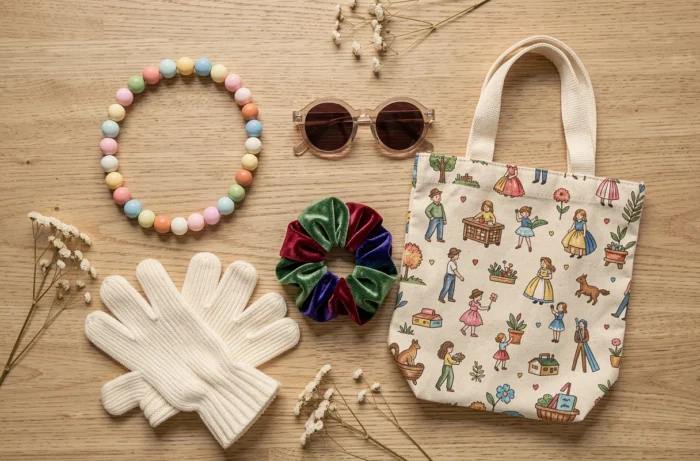
The 90s-2000s style also influences accessories: wide headbands, small round sunglasses, and mini nylon backpacks are making a comeback in playgrounds.
Eco-responsible children’s fashion: beyond the label, concrete actions
Eco-responsible children’s fashion goes beyond simply displaying a green label on the tag. In 2024, it translates into measurable design choices.
Brands that commit offer clothing designed to last: reinforcements at the knees, extendable hems, and replaceable buttons. These technical details extend the lifespan of a garment by several months, which is significant when a child grows quickly.
Some brands are also developing integrated second-hand circuits. The principle is simple: return a garment that has become too small, it is refurbished and resold at a reduced price. This model is beginning to take shape in the kidswear sector, with brands like Mori and Littleloop formalizing the resale of refurbished children’s clothing.
The new European regulation on toys, which came into effect on January 1, 2026, also introduces a digital product passport. While this requirement does not directly concern textiles, it signals a clear regulatory direction: traceability is becoming the norm for everything related to children.
Choosing children’s clothing in 2024 involves crossing three filters: the style the child likes to wear, the quality of the finishes, and the manufacturer’s transparency regarding the product’s origin. Current collections allow for ticking these three boxes without major compromises, as long as one looks beyond the product photo.